Basic Information
| Field | Details |
|---|---|
| Full name (as used here) | Paul J.m. Hunnings |
| Known for | Longtime spouse of Mary Rosa Alleyne Berry; quietly present partner and former books/sherry tradesman |
| Spouse | Mary Rosa Alleyne Berry — married 1966 |
| Children | Thomas (older son, c.1968), William (1969–1989), Annabel (daughter, c.1972) |
| Occupation (public descriptions) | Former employee in the sherry trade; antique books dealer; retired |
| Residence (longtime) | Countryside homes in Buckinghamshire / moved to Henley-on-Thames (reported 2018) |
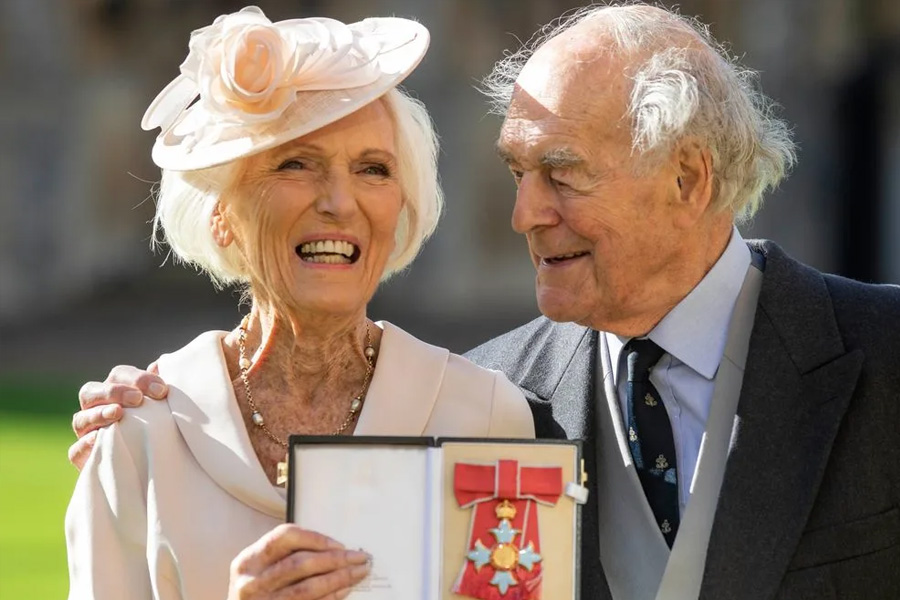
| Public profile | Private by nature; appears at family and ceremonial events but avoids the limelight |
| Net worth | Not publicly attributed to Paul specifically; financial attention generally focuses on his spouse |
A kitchen-table portrait — how I picture him
When I try to describe Paul J.m. Hunnings, I drift to a single image: a man at a kitchen table, the morning sun slicing the steam from a pot of tea, a battered book open beside a recipe card. He’s not the marquee act — he’s the bassline that keeps the song honest. If Mary Berry is the chorus everyone remembers, Paul is the steady verse you return to when you want the truth.
I write like this because biography, to me, is less about headlines and more about texture — the weight of a handshake, the smell of an old book, the way a couple finish each other’s sentences after six decades. This is a domestic film in which small gestures mean everything: three proposals before a “yes,” a shared grief that never left the frame, and decades of quiet, steady companionship. It’s a love story that prefers biscuits to bluster.
Family introductions — the cast, in order
I’ll introduce the family as you might meet them at a small dinner: casually, with warmth and no fuss.
| Name | Relation | Quick sketch |
|---|---|---|
| Mary Rosa Alleyne Berry | Spouse | Television chef, author, public figure — the visible name whose life Paul supports |
| Thomas Hunnings | Son (eldest, c.1968) | A private man who chose a practical, rooted life — the sort who likes to keep his hands busy |
| William John March Hunnings | Son (1969–1989) | A life cut tragically short at 19; his loss is a quiet pivot point in the family story |
| Annabel Hunnings | Daughter (c.1972) | Entrepreneurial with recipes and food projects — someone who bridged family traditions and small business |
If this were a TV series, Mary would get the opening credits, but Paul’s presence is the throughline — the partner who remembers recipes no one writes down and the man who knows the ordinary grief that follows extraordinary life.
Career and daily life — the small, honest trades
Paul’s professional arc reads like the perfect supporting role: work that’s tactile and patient. Early years in the sherry trade — handling bottles, labels, casks — then books: bindings, dust jackets, the patience of catalogue entries. These are trades that reward a particular temperament: quiet curiosity, an eye for detail, a tolerance for the slow and patient.
There’s romance in that résumé. Think of it as the backstage of a public life — someone who appreciates the materials, the process, the finished thing. He traded in objects with character and then, later, chose retirement. He never sought stardom; he cultivated steadiness.
Milestones and markers
- Married Mary Berry in 1966 — a year that set the frame for the rest of the story.
- Three children born in the late 1960s–early 1970s — a compact, busy family life.
- Tragic loss of William at age 19 in 1989 — a defining sorrow carried privately.
- Reported relocation to Henley-on-Thames around 2018 — a later-life chapter in a riverside town.
Numbers have their own kind of honesty — dates that hold memory like fingerprints. They’re small anchors for a life that otherwise means to stay steady rather than shout.
Public life, privacy, and the media echo
Paul isn’t a tabloid staple; he’s an architectural feature of Mary Berry’s public narrative. When cameras roll, he’s sometimes beside her — a hand at a shoulder, a private smile in a public frame. But mostly, he’s absent from the loud parts of celebrity. That absence is deliberate — a choice that makes the story more cinematic, if quieter: think noir lighting rather than neon.
There have been human interest pieces that touch on health scares, the couple’s long marriage, and the ways they navigated grief and later-life changes. The pattern is consistent: soft-focus profiles that emphasize devotion and discretion. In the era of constant spectacle, Paul’s preference for anonymity reads almost as a character choice — the dignified supporting actor refusing an award.
Numbers & dates that matter (compact reference)
| Item | Date / Number |
|---|---|
| Marriage | 1966 |
| Children (approx.) | Thomas (c.1968), William (1969–1989), Annabel (c.1972) |
| William’s death | 1989 (aged 19) |
| Move to Henley-on-Thames | Reported 2018 |
| Public-facing role | Supportive spouse; former sherry/books tradesman; retired |
Living in the margins — what makes the story cinematic
There’s an old film trick I love: focus the camera on the kettle, then pull back to reveal the couple holding hands. That’s Paul. The narrative tension isn’t scandal; it’s fidelity to the ordinary. The drama is in the small choices: the third proposal, the unglamorous trade in books and sherry, the way a family carries a long-ago loss.
Pop culture gives us archetypes: the Watson, the Robin, the sidekick. But here, labels feel thin — because Paul’s role is more complicated: he’s collaborator, confessor, and the quiet custodian of a family’s private life. He’s less a plot device and more the ground beneath the camera.
FAQ
Who is Paul J.m. Hunnings?
Paul J.m. Hunnings is best known as the longtime husband of Mary Berry, a private man who worked in the sherry trade and later sold antique books before retiring.
When did Paul and Mary get married?
They married in 1966.
How many children do they have?
They had three children: Thomas, William, and Annabel.
What happened to their son William?
William died in 1989 at the age of 19, a loss the family has carried privately.
What did Paul do for a living?
He worked in the sherry trade and as an antique books dealer, later described as retired.
Is Paul a public figure like his wife?
No; Paul prefers privacy and typically appears in public as Mary Berry’s supportive partner rather than as a public figure in his own right.
Building Search Visibility Without Chasing Magic Tricks
How Commercial Foundations Keep Buildings Standing Tall
Keeping Household Finances Afloat During Probate


