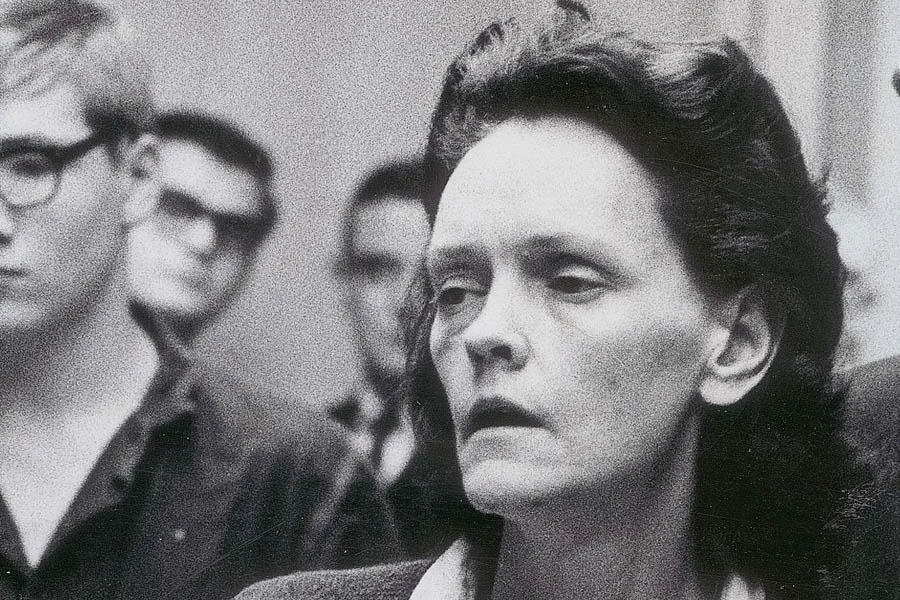
Basic Information
| Field | Detail |
|---|---|
| Name (as requested) | Stephanie Baniszewski |
| Also reported as | Stephanie Serikstad (reported married name) |
| Age at time of 1965 case | 15 years old (juvenile participant in events tied to the Sylvia Likens case) |
| Notable historical moment | Involved in the 1965 abuse/torture-murder case in Indianapolis; later testified for the prosecution. |
| Legal outcome for Stephanie | Charges were not pursued after she cooperated with prosecutors and testified. |
| Later life (reported) | Married, had children, and was later publicly referenced as living in Florida under the name Serikstad. |
| Career (reported) | Accounts suggest she lived privately and worked in education or related community roles (no verified employer listed). |
| Net worth | No reliable public data or credible estimate available. |
Family and Personal Relationships
I keep coming back to the image of a family like a cracked mirror — each shard reflecting the same darker light. The Baniszewski household in the 1960s became one of those mirrors everyone talks about, and the names attached to it are the pieces.
| Family Member | Relationship to Stephanie | Who they were (short intro) |
|---|---|---|
| Gertrude Nadine Baniszewski (née Van Fossan) | Mother | The central adult figure in the household; convicted in the murder case and later imprisoned. |
| Paula Baniszewski | Older sister | Seventeen at the time of the events; convicted and imprisoned for involvement, later assumed a new identity in civilian life. |
| John (Baniszewski) | Brother | Convicted in relation to the events, served time, and reportedly later led a quieter life under another name. |
| Marie (Baniszewski) Shelton | Sister | One of Stephanie’s siblings; obituary records later listed Stephanie by the Serikstad name, linking the family across decades. |
| Shirley Baniszewski | Sister | Named in historical accounts as another child of the household; less publicly followed later in life. |
| James Baniszewski | Brother | Listed among the children who lived in the home; placed in foster care after the arrests. |
| Dennis Lee Wright Jr. | Half-brother | Noted in contemporary records as a child of Gertrude with a different surname and life path. |
| Neighborhood youths (e.g., Coy Hubbard, Richard Hobbs) | Associates in the events | Not family, but frequently appear in the narrative as co-defendants or participants. |
I write this in a voice that leans toward the confessional because these were real people — teenagers and children — whose trajectories were violently bent by one infamous, horrifying moment. When you read the names, hear them as part of a chorus: some punished, some pardoned by time, some reinvented.
The 1965 Case and Legal Aftermath
That year — 1965 — the events that would etch the Baniszewski name into headlines unfolded. I think of it like a film cut into three stark acts: the household, the escalation, the courtroom. Stephanie was 15 then, a fact that keeps circling back to the moral questions audiences love to argue over. She cooperated with authorities, testified for the prosecution, and as a result, the legal system treated her differently than several other members of the household — charges against her were not pursued.
Numbers matter in a story like this: multiple siblings, a handful of neighborhood boys, and the tragic single victim whose death prompted a national outcry. Sentences ranged: some family members received long prison terms (first- and second-degree convictions for adult actors), others faced shorter sentences or different charges — and a few, like Stephanie, were legally spared incarceration after cooperation. Those courtroom minutes — the dates, the verdicts, the sentences — are the scaffolding of the public record, even if the human stories behind them remain messy and incomplete.
Career, Later Life, and Public Identity
If the 1960s were the cinematic climax, the decades that followed read like an attempt at fade-to-black: a name change, a marriage, children, a quieter life somewhere subtropical — Florida crops up in public notices. Reported later as Stephanie Serikstad, she was referenced in family obituaries and local accounts, a sign that the person who once stood in a courtroom had gone on to build a life out of the public eye.
Work life is foggy: some write-ups say she worked in education or local community roles — the sort of steady, ordinary jobs that let you blend in and, perhaps, atone in silence. No public-facing biography, no celebrity accounts, no net-worth estimates—just human-sized facts: marriage, children, privacy. For someone linked to a decades-old tragedy, privacy is a kind of currency she appears to have spent well.
How the Family Lived On — Public Memory and Media
Pop culture has a way of dragging old ghosts into new rooms. The case inspired dramatizations, films, and endless true-crime dissections — think late-night documentaries, a film that rewired public curiosity, and the steady churn of forums where people swap theories like trading cards. Every time a documentary airs, or a podcast replays the old interviews, the Baniszewski names get yanked back into the light — and the family is reinterpreted through each generation’s lens.
Numbers here: multiple dramatizations aired decades apart; at least one major film in the early 2000s brought the story to a new audience — and every re-airing adds a few hundred online mentions, comments, and speculative threads. The family’s story, therefore, is part legal record, part cultural artifact, part gossip fodder — a hybrid that makes accurate, empathetic writing all the more necessary.
A Few Dates to Pin Down the Arc
| Year | Event |
|---|---|
| 1965 | The abuse and murder case that involved the Baniszewski household occurred; legal proceedings followed. |
| 1960s (mid–late) | Trials and convictions for several family members; Stephanie cooperated and testified. |
| 2000s–2010s | Renewed media attention via dramatizations and retrospectives; family obituaries and mentions connect later-life names (e.g., Serikstad) to earlier identities. |
I like to think of the dates as mile markers on a road that several people were forced to travel together — sometimes in tandem, sometimes in opposing lanes — each mile leaving a different footprint.
FAQ
Who is Stephanie Baniszewski?
Stephanie Baniszewski was a 15-year-old involved in the 1965 abuse case tied to the murder of Sylvia Likens; she cooperated with prosecutors and later lived under a married name.
What was her role in the 1965 case?
She was part of the household group implicated in the abuse and later testified for the prosecution; charges against her were not pursued afterward.
Did Stephanie go to prison?
No — after her cooperation and testimony, prosecutors chose not to pursue charges that would have led to imprisonment.
What happened to her family members?
Several family members were convicted and sentenced in varying degrees; some served lengthy prison terms while others later tried to rebuild private lives.
Is Stephanie still alive and where does she live?
Public records and family notices have later referenced a Stephanie living in Florida under a married name, but current private details are not public.
What is her net worth?
There is no credible public information or reliable estimate available about Stephanie’s net worth.
Has the story been depicted in film or media?
Yes — dramatizations and a noted feature film renewed public interest and contributed to ongoing media coverage and online discussions.


